



Future of Science by 2030: Space, Robotics & Quantum Computing
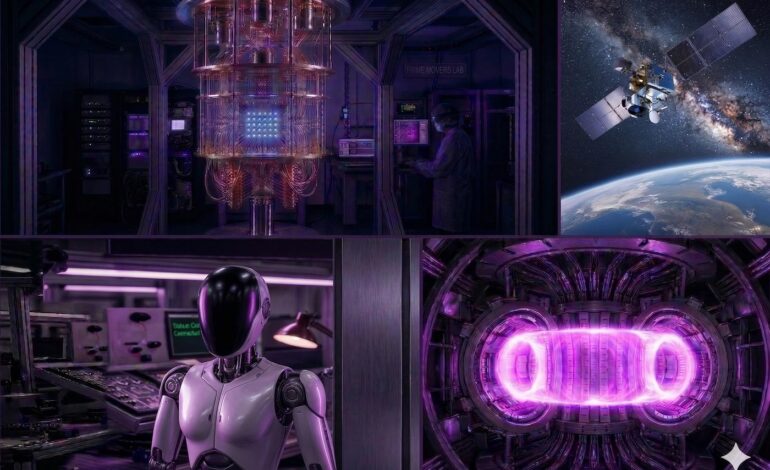

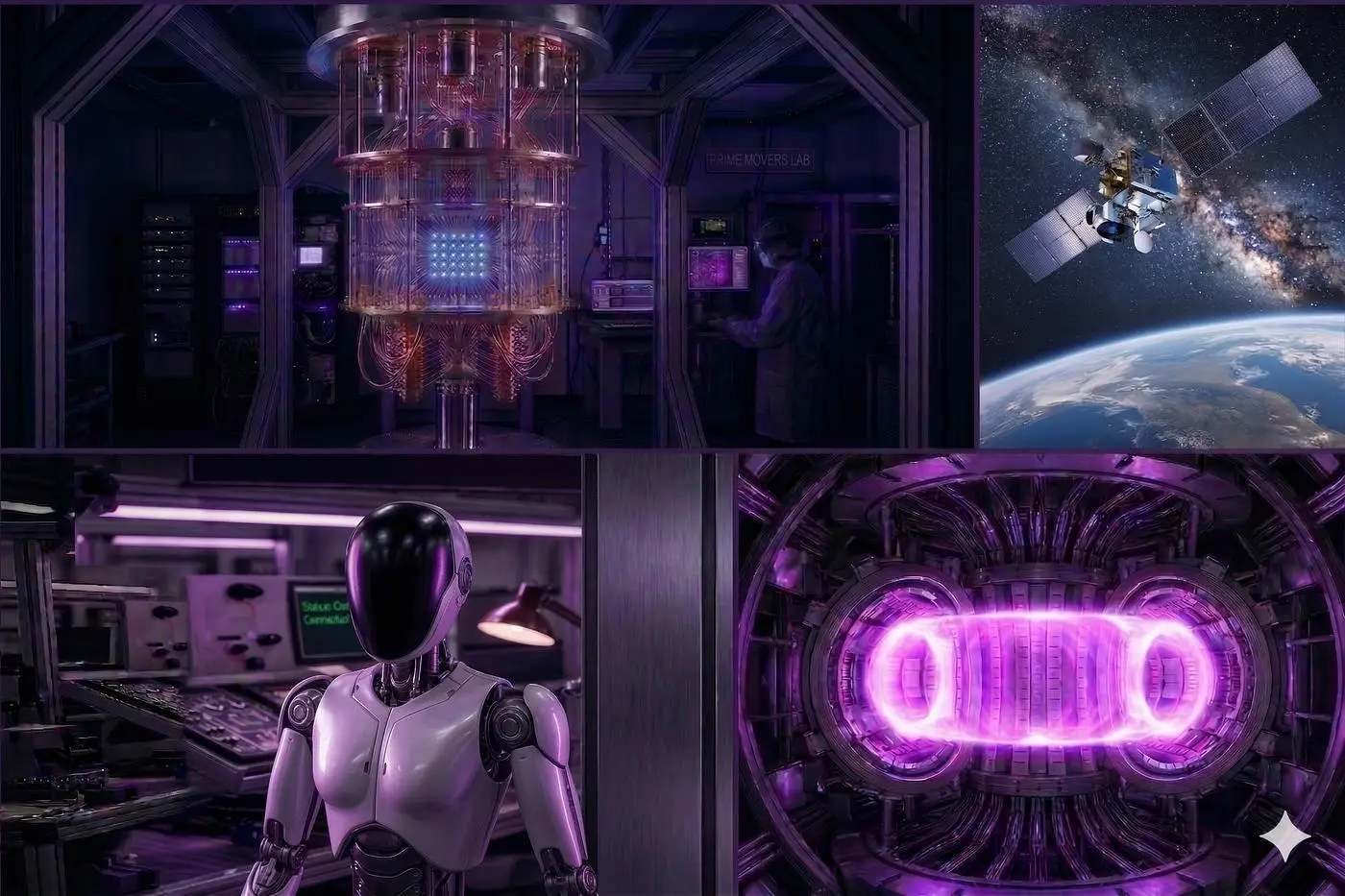
The Future of Science: How Space Exploration, Robotics and Quantum Computing Will Transform the World by 2030
Science is entering a new era. From humans preparing to establish a presence on the Moon to intelligent robots performing complex tasks and quantum computers solving problems beyond the capabilities of conventional machines, the next decade could redefine how humanity lives, works and explores the universe.
Technologies that once seemed like science fiction are gradually becoming scientific and engineering realities. Governments, research institutions and technology companies around the world are investing billions in space exploration, advanced robotics and quantum computing.
India is also becoming an important participant in this transformation through its space missions, National Quantum Mission and growing research ecosystem.
But what exactly is coming next? And how could these technologies change our lives by 2030?
Let’s explore the three major scientific fields shaping the future.
1. Space Exploration: Humanity’s Next Destination Is Beyond Earth
Space exploration is moving beyond launching satellites and sending astronauts into orbit. The next phase focuses on sustainable lunar exploration, advanced space stations, planetary research and eventually human missions to Mars.
The Moon Could Become Humanity’s Next Scientific Laboratory
The Moon is becoming a major destination for international space agencies.
NASA’s Artemis programme aims to establish a long-term human presence on the lunar surface. Future missions will focus on scientific research, lunar resources, infrastructure and technologies needed for deeper space exploration.
One of the biggest scientific interests is water ice near the Moon’s south pole. If accessible and usable, lunar water could potentially support astronauts and help produce resources needed for future exploration.
NASA is also developing robotic technologies to explore difficult lunar environments before astronauts arrive.
India’s Growing Ambitions in Space
India is preparing for an exciting phase of space exploration through ISRO.
Some important upcoming developments include:
- Gaganyaan Mission: India’s first human spaceflight programme, designed to send Indian astronauts into low Earth orbit.
- Chandrayaan-4: A planned lunar sample-return mission targeted for 2027.
- Chandrayaan-5 (LUPEX): A collaborative ISRO-JAXA mission to investigate the Moon’s south polar region and search for water-related resources.
- Bharatiya Antariksh Station: India’s planned space station, with its first module targeted for 2028 and operationalisation targeted by 2035.
- Venus Orbiter Mission: India’s planned mission to study Venus, targeted for March 2028.
These programmes demonstrate that India’s ambitions are expanding from successful satellite launches to advanced human spaceflight and planetary exploration.
Could Humans Live on the Moon or Mars?
Establishing a permanent human presence beyond Earth is one of the biggest challenges in modern science.
Scientists must solve several problems:
- Protecting astronauts from harmful space radiation.
- Producing oxygen and drinking water.
- Developing reliable energy systems.
- Growing food in controlled environments.
- Building habitats that can survive extreme temperatures.
- Creating communication systems for long-distance missions.
Robotics, artificial intelligence and advanced materials will play an important role in solving these challenges.
2. Robotics: From Industrial Machines to Intelligent Humanoid Robots
Robotics is evolving beyond traditional factory machines. Modern robots are increasingly being designed to understand their surroundings, make decisions and perform tasks with greater independence.
The combination of artificial intelligence, sensors, advanced computing and mechanical engineering is creating a new generation of intelligent machines.
Humanoid Robots Could Transform the Workplace
Humanoid robots are designed with human-like body structures, including arms, legs and sometimes facial features.
Unlike traditional industrial robots that usually perform specific repetitive tasks, humanoid robots aim to operate in environments originally designed for humans.
Potential applications include:
- Manufacturing and industrial production.
- Healthcare assistance and elderly care.
- Warehouse operations and logistics.
- Dangerous construction and mining activities.
- Household assistance.
- Disaster response and rescue operations.
However, widespread adoption will depend on improvements in safety, reliability, affordability and real-world performance.
Space Robots: Machines That Explore Where Humans Cannot
Robotics is also becoming essential to space exploration.
NASA’s Mars rovers demonstrate how robotic systems can explore distant planets, collect scientific information and operate in environments that are difficult for humans to reach.
A particularly interesting development is NASA’s Fly Foundational Robots mission, planned for late 2027. It aims to demonstrate a robotic arm capable of manipulating equipment and performing tasks in low Earth orbit.
Future space robots could help:
- Repair damaged satellites.
- Assemble large structures in orbit.
- Maintain space stations.
- Collect and transport equipment.
- Explore dangerous lunar and planetary environments.
These capabilities could eventually make space infrastructure more sustainable and reduce the need for astronauts to perform every maintenance task.
India’s Opportunity in Robotics
India has opportunities to become a major robotics development hub.
Research in autonomous systems, industrial automation, medical robotics, agricultural robots and space robotics could create new opportunities for Indian startups and engineering companies.
The growing integration of AI and robotics will also increase demand for skilled professionals in mechanical engineering, electronics, computer science and automation.
3. Quantum Computing: The Next Revolution in Computing
Traditional computers process information using bits, which represent either 0 or 1.
Quantum computers use quantum bits, known as qubits, which operate according to the principles of quantum mechanics.
Through phenomena such as superposition and entanglement, quantum systems can process certain types of computational problems in fundamentally different ways.
Quantum computing is not simply a faster replacement for ordinary computers. Its greatest potential lies in solving specialised problems that are extremely difficult for conventional computing systems.
Where Could Quantum Computing Be Used?
Quantum computing research could eventually contribute to several important industries.
1. Healthcare and Drug Discovery
Quantum simulations may help researchers understand molecular interactions and investigate new drug candidates.
2. Cybersecurity
Large-scale fault-tolerant quantum computers could threaten some widely used public-key cryptographic systems. This is why researchers are developing post-quantum cryptography to protect future digital infrastructure.
3. Financial Services
Quantum algorithms could potentially improve certain optimisation and financial modelling problems, although practical advantages remain under research.
4. Climate Research
Quantum simulations may help scientists investigate complex chemical processes, materials and energy systems relevant to climate-related research.
5. Advanced Materials
Researchers could use quantum computers to simulate molecular and material properties, potentially supporting the development of new batteries, catalysts and industrial materials.
India’s National Quantum Mission
India is investing in quantum technology through its National Quantum Mission (NQM).
The mission has an approved outlay of approximately ₹6,003.65 crore and focuses on four major areas:
- Quantum Computing.
- Quantum Communication.
- Quantum Sensing and Metrology.
- Quantum Materials and Devices.
India is also developing research facilities, supporting startups and encouraging collaboration between universities, research institutions and industry.
An important development is the creation of indigenous quantum algorithms by Indian research teams.
According to the Ministry of Science and Technology, an IIT Goa and IBM Research collaboration demonstrated a quantum algorithm for simulating the strong nuclear force on a 120-qubit IBM quantum processor.
The mission aims to build progressively more capable quantum computing systems over the coming years.
However, practical, large-scale quantum computing still faces major challenges, including error correction, qubit stability and hardware scalability.
4. How Space, Robotics and Quantum Computing Will Work Together
The most significant scientific breakthroughs may not come from these technologies individually, but from their integration.
Imagine a future lunar research station where:
- Autonomous robots construct and maintain infrastructure.
- Quantum sensors support highly precise scientific measurements.
- Advanced computing systems process enormous amounts of scientific data.
- Satellites provide communication and navigation.
- Intelligent robotic systems explore regions too dangerous for astronauts.
Similarly, future manufacturing facilities could combine robotics, AI and advanced computing to improve productivity and develop new materials.
These technologies are interconnected and could accelerate scientific discovery across multiple industries.
5. What Could the World Look Like by 2030?
The period leading up to 2030 could bring significant progress in these fields, although timelines will depend on technical breakthroughs, investment and regulatory developments.
Here are some possibilities to watch:
| Technology | Potential development by 2030 |
|---|---|
| Space Exploration | More advanced lunar missions and space infrastructure |
| Space Robotics | Increased robotic servicing and orbital demonstrations |
| Humanoid Robots | Wider industrial testing and specialised deployments |
| Quantum Computing | More capable quantum processors and research applications |
| Quantum Communication | Progress in secure quantum communication networks |
| Space Stations | Development of India’s and other nations’ space infrastructure |
These are emerging opportunities rather than guaranteed outcomes. Many technologies will require years of additional research before becoming commercially practical.
6. Careers and Skills: Will Science Create New Opportunities?
The development of these technologies will also change the global employment landscape.
Students and professionals interested in future scientific careers can consider developing skills in:
- Robotics and automation engineering.
- Artificial intelligence and machine learning.
- Quantum physics and quantum programming.
- Aerospace engineering.
- Embedded systems and electronics.
- Satellite communication and navigation.
- Advanced materials and computational science.
India’s expanding research ecosystem could create opportunities for engineers, scientists, software developers and technology entrepreneurs.
For students, developing strong foundations in mathematics, physics, programming and problem-solving will be increasingly valuable.
Conclusion: The Future of Science Is Being Built Today
Space exploration, robotics and quantum computing are no longer isolated scientific ambitions. They represent three interconnected areas that could influence the future of humanity.
Space technology may expand our understanding of the universe. Robotics could change how industries operate and how humans interact with machines. Quantum computing could open new approaches to solving complex scientific problems.
India is also positioning itself to participate in this transformation through ISRO’s ambitious space programmes, the National Quantum Mission and investments in emerging technologies.
The journey towards 2030 will bring challenges, discoveries and new possibilities.
One thing is becoming increasingly clear: the future of science will not only change how we understand the world, but also how we build the world of tomorrow.