

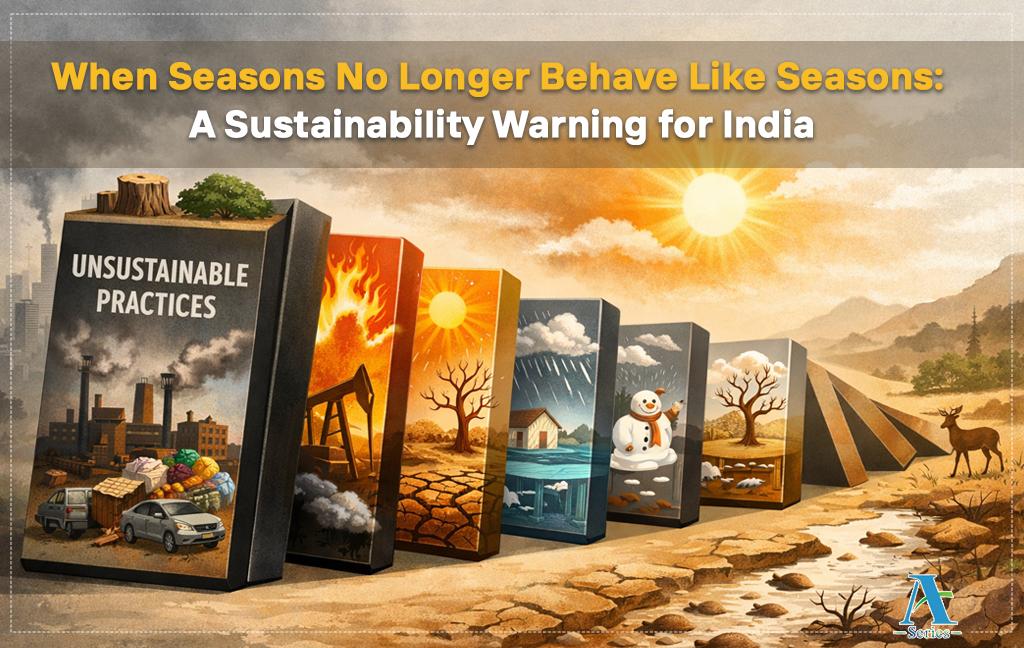




Why Is November Still So Hot in India? Global Warming, Its Causes, Effects and Possible Solutions

Where Have India’s Winters Gone?
Remember when winter used to arrive in October?
Just five years ago, people in many parts of North India would start wearing full-sleeved T-shirts, sweatshirts and light jackets as October approached. By November, winter clothing had become part of everyday life.
But today, things seem different.
Even in November 2026, many people across parts of India are still comfortable wearing ordinary T-shirts. The familiar feeling of approaching winter appears to be changing, and people are beginning to ask an important question:
Why is it still so hot in November? Is global warming changing India’s seasons?
This is not just a matter of clothing or personal comfort. It raises serious concerns about changing weather patterns, rising temperatures, environmental pollution, deforestation and the future of our planet.
According to the India Meteorological Department (IMD), above-normal maximum and minimum temperatures were likely across most parts of India during November 2026.
Although individual weather conditions vary from year to year, the broader trend of global warming is scientifically established.
The planet is getting warmer, and human activities are playing a major role.
Let’s understand what is happening, why it is happening, what other factors contribute to global warming, and what humanity can do before the situation becomes even more difficult to manage.
1. What Is Global Warming?
Global warming refers to the long-term increase in the Earth’s average surface temperature, primarily caused by the accumulation of greenhouse gases in the atmosphere.
These gases include:
- Carbon dioxide (CO2)
- Methane (CH4)
- Nitrous oxide (N2O)
- Fluorinated gases
Normally, the Earth’s atmosphere retains some of the heat received from the Sun, keeping the planet warm enough to support life.
However, human activities have significantly increased the concentration of greenhouse gases. This strengthens the natural greenhouse effect, trapping additional heat in the atmosphere.
As a result, the Earth’s average temperature continues to rise.
The Intergovernmental Panel on Climate Change (IPCC) confirms that human activities, particularly greenhouse gas emissions, have unequivocally caused global warming.
This is not simply a theory or a temporary weather condition. It is a long-term environmental challenge supported by extensive scientific research.
2. Major Causes of Global Warming
Global warming does not have just one cause. It is the result of multiple human activities that collectively increase greenhouse gas emissions and damage natural ecosystems.
Here are some of the biggest contributors.
1. Overpopulation and Increasing Consumption
The global population has grown significantly over the past century.
More people mean greater demand for:
- Housing and infrastructure
- Electricity and fuel
- Food and drinking water
- Transportation
- Consumer products
However, population alone does not determine environmental damage. Consumption patterns and resource use per person also matter.
When cities expand without proper environmental planning, forests are cleared, natural land disappears and energy consumption increases.
The challenge is not simply how many people live on Earth, but how sustainably humanity uses its resources.
2. Deforestation: Cutting Down the Earth’s Natural Cooling System
Trees are among the most important natural systems helping regulate the Earth’s climate.
They absorb carbon dioxide, store carbon, provide shade and support the water cycle.
Unfortunately, forests are continuously cleared for:
- Residential and commercial construction
- Roads and highways
- Industrial development
- Agricultural expansion
- Mining and other infrastructure projects
When trees are removed, the planet loses an important natural carbon sink. Cutting or burning forests can also release stored carbon into the atmosphere.
Fewer trees also mean less shade and reduced natural cooling in cities.
Planting trees is important, but protecting existing forests is equally essential.
3. Increasing Number of Vehicles on Roads
Look at any major Indian city during peak hours.
Thousands of cars, motorcycles, buses and commercial vehicles remain on the roads, often stuck in traffic.
Most conventional petrol and diesel vehicles release carbon dioxide through fuel combustion.
Transportation also contributes to air pollution through nitrogen oxides, particulate matter and other harmful emissions.
The growing dependence on private vehicles increases fuel consumption and greenhouse gas emissions.
Electric vehicles can help reduce direct road emissions, but their overall climate benefits also depend on how the electricity used to charge them is generated.
4. Industrial Pollution and Factory Emissions
Industrial development is essential for economic growth, employment and manufacturing.
However, many industries still depend heavily on coal, petroleum and natural gas.
Factories, power plants, cement production, steel manufacturing and chemical industries release significant greenhouse gas emissions.
Some industrial activities also generate pollutants that affect air quality and human health.
Without cleaner technologies, energy efficiency and proper emission controls, industrial expansion can increase environmental pressure.
5. Excessive Use of Air Conditioners
Air conditioning has become increasingly common in homes, offices, shopping malls, hotels and commercial buildings.
As temperatures rise, people naturally depend more on cooling systems.
However, air conditioners can create an additional environmental challenge.
First: Electricity consumption
Air conditioners consume electricity. Where that electricity comes from coal- or gas-based power generation, increased cooling demand can result in additional greenhouse gas emissions.
Second: Heat released outdoors
Air conditioners transfer indoor heat to the outside environment. Their outdoor units release this heat into surrounding areas.
When thousands of AC units operate simultaneously in densely populated urban areas, they can contribute to local outdoor heating, particularly in already hot streets and poorly ventilated spaces.
Third: Refrigerant gases
Some refrigerants used in cooling systems have extremely high global warming potential if they leak into the atmosphere.
Therefore, energy-efficient air conditioners, regular maintenance and environmentally safer refrigerants are important.
6. Construction of Concrete Buildings and Roads
Modern cities are expanding rapidly.
Natural land is increasingly being replaced with:
- Concrete roads
- Asphalt highways
- Commercial buildings
- Residential towers
- Parking areas
- Industrial complexes
Concrete and asphalt absorb and store solar heat during the day and release it gradually, including during the night.
This contributes to a phenomenon known as the Urban Heat Island Effect.
As a result, densely developed cities can remain considerably warmer than nearby rural areas.
The problem becomes worse when cities have fewer trees, limited open spaces and poor ventilation.
7. Agricultural Activities and Methane Emissions
Agriculture is essential for feeding the global population, but certain agricultural practices contribute to climate change.
Important sources include:
- Methane released by livestock, particularly cattle
- Methane emissions from flooded rice fields
- Nitrous oxide released from agricultural soils
- Excessive use of nitrogen-based fertilizers
- Burning of agricultural residues
Methane is particularly important because it traps significantly more heat than carbon dioxide over a 20-year period.
Improving agricultural practices, fertilizer management and livestock systems can help reduce these emissions.
8. Wars, Military Activities and Environmental Destruction
Wars are usually discussed in terms of human casualties, national security and economic damage.
However, their environmental impact deserves attention too.
Military operations can involve enormous quantities of fuel used by aircraft, tanks, naval vessels and other equipment.
Explosions, fires and destruction of industrial facilities can release pollutants and greenhouse gases.
Furthermore, rebuilding destroyed cities, roads and infrastructure requires large quantities of cement, steel, energy and other resources.
Wars also damage forests, agricultural land and ecosystems.
Although military activities are not the primary driver of global warming compared with the overall fossil-fuel economy, their environmental footprint should not be ignored.
9. Burning Coal, Oil and Natural Gas
This is one of the most significant contributors to global warming.
Electricity generation, transportation, industrial production and many household activities still depend on fossil fuels.
Whenever coal, petrol, diesel or natural gas is burned, carbon dioxide is released.
As greenhouse gas concentrations increase, more heat is retained in the Earth’s climate system.
Transitioning towards solar, wind, hydroelectric and other low-carbon energy sources is therefore essential.
10. Waste Generation, Plastic Pollution and Landfills
Modern lifestyles generate enormous quantities of waste.
Food waste, plastic packaging, electronic waste, discarded clothing and other materials create environmental pressure.
When organic waste decomposes in landfills without proper management, it can release methane.
Plastic production also requires fossil-fuel-based raw materials and energy.
Reducing unnecessary consumption, recycling materials and improving waste management can help reduce emissions.
11. Loss of Wetlands and Natural Ecosystems
Wetlands, lakes, mangroves and other natural ecosystems play an important role in maintaining environmental balance.
They support biodiversity, regulate water systems and, in many cases, store significant quantities of carbon.
When wetlands are drained or destroyed for construction and development, their ecological benefits are lost.
Protecting these ecosystems is an important part of climate action.
3. Why Is November Still Hot in India?
Global warming does not mean that every day or every month will always be hotter than the previous year.
Weather changes naturally due to atmospheric conditions, rainfall, wind patterns, ocean temperatures and other factors.
However, long-term climate change is shifting the baseline on which these weather patterns operate.
Several factors can influence India’s November temperatures.
El Niño: Changes in Pacific Ocean temperatures can influence atmospheric circulation and Indian weather patterns.
Reduced rainfall: Cloud cover, rainfall and soil moisture can influence local temperatures.
Urban Heat Island Effect: Cities with extensive concrete construction, limited vegetation and heavy human activity can retain more heat.
Changing climate patterns: Long-term global warming increases the likelihood and intensity of many heat-related extremes.
For November 2026, IMD highlighted the likelihood of above-normal temperatures across most parts of India and noted prevailing strong El Niño conditions over the equatorial Pacific.
This provides a useful example of how climate patterns and natural variability can interact.
The important distinction is that a single warm November does not independently prove global warming. Long-term temperature records provide much stronger evidence.
4. Major Effects of Global Warming on Earth
Global warming is not limited to uncomfortable summers or delayed winters.
Its consequences can affect almost every part of human life.
1. Rising Global Temperatures
Longer and more intense heatwaves can increase health risks, reduce productivity and place additional pressure on electricity and water supplies.
2. Melting Glaciers and Rising Sea Levels
Higher temperatures contribute to glacier loss and the expansion of warming ocean water.
This increases the risk of rising sea levels, threatening coastal communities and low-lying islands.
3. Water Scarcity
Changing rainfall patterns, higher evaporation and declining water availability can create serious challenges for agriculture, drinking water and industries.
4. Extreme Weather Events
Climate change can increase the likelihood or intensity of certain extreme events, including heatwaves and heavy rainfall in many regions.
Floods, droughts and storms can damage infrastructure, homes and agricultural production.
5. Agricultural Damage and Food Security
Higher temperatures and changing rainfall patterns can affect crop yields, livestock productivity and food prices.
Farmers may face greater uncertainty about sowing seasons, irrigation requirements and harvesting conditions.
6. Health Problems
Extreme heat can cause dehydration, heat exhaustion and heatstroke.
Climate-related changes can also affect air quality, food security and the spread of certain infectious diseases.
7. Loss of Biodiversity
Many plants and animals depend on specific temperature and environmental conditions.
As ecosystems change, some species struggle to adapt, migrate or survive.
The consequences can affect entire food chains and natural ecosystems.
5. How Can Humanity Stop or Slow Down Global Warming?
Global warming is a global challenge, but solutions begin with individual decisions, responsible businesses and stronger government policies.
No single person can solve this problem alone. However, collective action can make a meaningful difference.
1. Plant More Trees and Protect Existing Forests
Tree plantation should become a continuous environmental activity rather than a one-day campaign.
Individuals, schools, housing societies, businesses and government institutions can:
- Plant native tree species.
- Protect existing trees from unnecessary cutting.
- Maintain and water planted saplings.
- Support forest conservation programmes.
- Develop green spaces in urban areas.
Remember: planting a tree is only the beginning. Keeping it alive is equally important.
2. Reduce Unnecessary Vehicle Usage
People can reduce transportation-related emissions by making smarter travel choices.
- Use public transportation whenever possible.
- Share vehicles for common journeys.
- Walk or cycle for short distances where safe.
- Avoid unnecessary engine idling.
- Maintain vehicles regularly.
- Consider electric or more fuel-efficient vehicles when replacing an existing vehicle.
A reduction in unnecessary private vehicle use can also improve urban air quality.
3. Use Air Conditioners Responsibly
Air conditioning is often necessary, especially during extreme heat.
However, responsible usage can reduce its environmental impact.
- Set AC temperatures at a comfortable, energy-efficient level.
- Clean filters regularly.
- Maintain cooling systems properly.
- Choose energy-efficient appliances.
- Prevent refrigerant leakage.
- Use ceiling fans where practical.
- Improve building insulation and ventilation.
Cooling technology should become more efficient as demand increases.
4. Switch Towards Renewable Energy
Solar and wind energy can significantly reduce dependence on fossil fuels.
Homeowners can explore rooftop solar installations where suitable.
Businesses can invest in renewable electricity, energy-efficient machinery and cleaner production processes.
Governments should continue expanding reliable renewable energy infrastructure.
5. Reduce Plastic and Unnecessary Consumption
Small changes in purchasing habits can reduce waste and resource consumption.
- Carry reusable shopping bags.
- Avoid unnecessary single-use plastics.
- Reuse products whenever practical.
- Recycle suitable materials.
- Avoid wasting food.
- Choose durable products rather than frequently replacing them.
The best waste is often the waste that is never generated.
6. Support Sustainable Agriculture
Farmers, agricultural companies and policymakers can work together to improve agricultural sustainability.
Important steps include:
- Efficient fertilizer application.
- Better irrigation management.
- Crop residue management without open burning.
- Improved livestock management.
- Soil conservation.
- Climate-resilient farming practices.
Sustainable agriculture can support both food security and environmental protection.
7. Make Cities Greener
Urban development should not be measured only by the number of buildings, highways and commercial projects.
Cities also need:
- Green belts and urban forests.
- Protected lakes and wetlands.
- Rooftop gardens.
- Green building designs.
- Better public transport.
- Proper ventilation between buildings.
- More shaded pedestrian spaces.
A sustainable city should be designed for people and the environment, not just infrastructure.
8. Make Industries More Environmentally Responsible
Businesses have a major responsibility in reducing greenhouse gas emissions.
Industries should focus on:
- Cleaner production technologies.
- Renewable electricity.
- Energy-efficient equipment.
- Waste reduction and recycling.
- Emission monitoring.
- Responsible water management.
- Transparent environmental reporting.
Economic growth and environmental responsibility must go together.
9. Reduce Food Waste
Food waste is not just a household problem.
Food production, transportation, storage and disposal all require resources and energy.
When food waste decomposes in landfills, it can also generate methane.
Planning meals, storing food properly and donating safe surplus food can help reduce unnecessary waste.
10. Educate the Next Generation
Environmental awareness should begin at home and in schools.
Children should understand:
- Why trees matter.
- Why water conservation is important.
- How pollution affects human health.
- Why electricity should not be wasted.
- How individual choices influence the environment.
The next generation will inherit the environmental consequences of today’s decisions.
6. What Can Governments and Businesses Do?
Individual responsibility is important, but large-scale environmental change requires institutional action.
Governments should strengthen environmental regulations, protect forests, improve public transport, expand renewable energy and monitor industrial emissions.
Businesses should measure their carbon footprints, reduce unnecessary energy consumption and adopt cleaner technologies.
Cities should develop long-term climate action plans that address heatwaves, water scarcity, flooding and urban pollution.
International cooperation is also necessary because greenhouse gases do not respect national borders.
Climate change is a shared global challenge and requires shared responsibility.
7. Can We Really Reverse Global Warming?
This is one of the most important questions.
The answer requires understanding the difference between stopping additional warming and reversing the warming that has already occurred.
Global warming cannot be stopped immediately because greenhouse gases, particularly carbon dioxide, can remain in the climate system for a long time.
However, humanity can still limit future temperature increases.
To achieve net-zero carbon dioxide emissions globally, the amount of carbon dioxide released must be balanced by the amount removed.
Rapidly reducing fossil fuel consumption, protecting forests, cutting methane emissions and expanding clean energy can significantly slow global warming.
Some climate impacts may be irreversible over very long timescales, but every reduction in emissions helps limit future risks.
The worst outcome is not inevitable. The decisions humanity makes today will influence how much warmer the planet becomes tomorrow.
8. The Responsibility Is Ours: Small Actions, Global Impact
It is easy to blame governments, industries or other countries for climate change.
However, our everyday choices also influence environmental outcomes.
Leaving unnecessary lights switched on, wasting electricity, using private vehicles for every short journey, purchasing products we do not need and wasting food all contribute to resource consumption.
At the same time, individuals should not be expected to carry the entire responsibility.
Governments must create effective policies, companies must adopt sustainable practices and communities must participate in environmental protection.
We need a collective change in the way we produce, consume, travel and develop our cities.
Conclusion: If We Ignore Nature Today, We May Pay the Price Tomorrow
The fact that November can still feel like summer in parts of India should make us think about the environmental changes taking place around us.
The problem is much bigger than wearing T-shirts instead of jackets.
It is about rising temperatures, disappearing forests, increasing energy consumption, polluted air, changing rainfall patterns and the long-term sustainability of human life.
We cannot control every natural weather variation, but we can control many of the activities that contribute to climate change.
We can plant trees, protect forests, use cleaner energy, reduce waste, travel responsibly and demand environmentally responsible policies.
The Earth does not need another awareness campaign that ends after a few social media posts.
It needs consistent action.
The question is no longer whether climate change will affect our future. The real question is what we are willing to change today to protect that future.
Protecting the planet is not somebody else’s responsibility. It is everyone’s responsibility.
Frequently Asked Questions (FAQs)
1. Why is November still hot in India?
November temperatures can remain higher than usual due to a combination of long-term global warming, El Niño conditions, rainfall patterns and local urban heat effects. IMD also forecast above-normal temperatures across most parts of India during November 2026.
2. What is the biggest cause of global warming?
The burning of fossil fuels such as coal, oil and natural gas is the largest driver of human-caused global warming. Deforestation, agriculture, industrial activities and waste management also contribute.
3. Does cutting down trees increase global warming?
Yes. Deforestation reduces the Earth’s ability to absorb carbon dioxide and can release carbon stored in trees and soil, contributing to global warming.
4. Do air conditioners contribute to global warming?
Yes. Air conditioners consume electricity, which may generate greenhouse gas emissions depending on the energy source. Refrigerant leaks can also contribute significantly to global warming. Outdoor units additionally release heat into their surroundings.
5. Can planting trees stop global warming?
Tree planting can help absorb carbon dioxide and improve local environments. However, it cannot solve global warming alone. Reducing fossil fuel emissions and protecting existing forests are equally important.
6. How can an ordinary person help reduce global warming?
People can use public transport, conserve electricity, reduce waste, avoid unnecessary plastic, protect trees, choose energy-efficient appliances and support renewable energy.
7. Is global warming responsible for the disappearance of winters?
Global warming is changing average temperatures and seasonal patterns, but winters have not disappeared. Natural climate variability and regional weather conditions also influence winter temperatures.
8. What is the difference between global warming and climate change?
Global warming refers specifically to the long-term rise in Earth’s average temperature. Climate change includes broader long-term changes in temperatures, rainfall, weather patterns, oceans and ecosystems.
References and Further Reading
For readers who want to explore climate science and environmental research in more detail:
- IPCC – Climate Change 2023: Synthesis Report
- United Nations – Causes and Effects of Climate Change
- NASA – Climate Change: Evidence and Causes
- India Meteorological Department (IMD)
- United Nations – Key Findings on Climate Change
About Protron Media
Protron Media brings readers informative articles, technology insights, current affairs and important developments shaping our world. Follow Protron Media for more insights into the issues that matter.


