



PM Modi Jordan Visit: Why It Matters for India and the Middle East
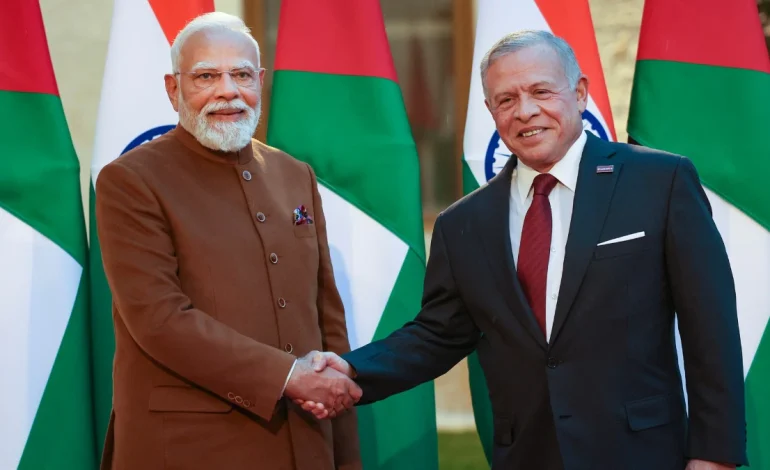

PM Modi Jordan visit marks an important moment in India’s Middle East diplomacy. The visit is not merely ceremonial; it reflects India’s strategic intent to deepen engagement with key regional partners that play a stabilising role in West Asia. As global geopolitics undergo rapid shifts, India’s outreach to Jordan highlights a foreign policy built on balance, dialogue and long-term cooperation.
While much attention often focuses on India’s relations with Gulf nations, Jordan holds a unique position in the region. Understanding why this visit matters requires looking beyond headlines and examining its strategic, economic and diplomatic significance.
Why the PM Modi Jordan Visit Matters for India’s Middle East Strategy
Jordan may not be a major energy exporter, but it is one of the most politically stable countries in a volatile region. It has long played a moderating role in regional diplomacy and peace initiatives.
For India, engaging Jordan strengthens:
Diplomatic presence in West Asia
Partnerships with stability-oriented nations
Dialogue-driven foreign policy outreach
The PM Modi Jordan visit reinforces India’s approach of building ties with countries that value neutrality, cooperation and regional balance.
PM Modi Jordan Visit and India’s Strategic Engagement with West Asia
India’s Middle East strategy has evolved significantly over the past decade. It is no longer limited to oil imports or expatriate welfare. Instead, it focuses on long-term strategic partnerships.
The visit signals:
India’s growing confidence in regional diplomacy
A shift from transactional to strategic engagement
Broader cooperation beyond energy
India is positioning itself as a reliable partner that respects sovereignty and avoids interventionist politics.
Security and Stability: A Key Focus of the PM Modi Jordan Visit
Jordan’s experience in counter-terrorism and regional security makes it a valuable strategic partner for India. Cooperation in these areas supports India’s own security objectives.
Key areas of collaboration include:
Counter-terrorism dialogue
Intelligence sharing
Defence cooperation
Regional security coordination
Strengthening such partnerships enhances India’s preparedness while contributing to regional stability.
For official background on bilateral ties, refer to the Ministry of External Affairs:
https://www.mea.gov.in/bilateral-documents.htm?dtl/indiajordan
Economic and Trade Opportunities Highlighted During PM Modi Jordan Visit
While strategic dialogue is central, economic cooperation remains an important pillar of India-Jordan relations.
Potential growth areas include:
Pharmaceuticals and healthcare
Information technology services
Infrastructure and construction
Education and skill development
Renewable energy
Jordan’s geographic location also positions it as a gateway for Indian companies looking to expand into the broader Middle East and European markets.
Insights into regional economic dynamics can also be found via the World Bank’s Middle East resources:
https://www.worldbank.org/en/region/mena
People-to-People and Cultural Ties Strengthen Long-Term Relations
Diplomacy today extends beyond governments. Cultural exchanges, education and tourism play a growing role in sustaining bilateral relations.
India and Jordan share:
Historical and cultural connections
Academic collaboration opportunities
Tourism and heritage exchanges
By strengthening these ties, India enhances soft power influence, which complements strategic engagement.
What the PM Modi Jordan Visit Signals for India’s Global Positioning
The PM Modi Jordan visit reflects India’s broader global ambition — to act as a responsible, balanced and independent power.
The visit supports:
India’s expanding diplomatic footprint
Issue-based partnerships instead of alliances
Greater credibility in international forums
Jordan’s role as a stabilising voice in West Asia makes it a valuable partner in this vision.
For context on regional diplomacy and global coordination, see the United Nations’ West Asia overview:
Why This Visit Matters Beyond Diplomacy
This visit is not just about bilateral relations. It reflects how India is adapting to a multipolar world.
It highlights:
India’s preference for dialogue over confrontation
Long-term thinking in foreign policy
Strategic patience and consistency
Much like policy challenges discussed in our analysis of the Delhi-NCR AQI crisis, sustainable solutions require planning beyond short-term reactions.
https://protronmedia.com/delhi-ncr-aqi-crisis-explained/
Final Thought: A Strategic Visit with Long-Term Impact
The PM Modi Jordan visit is a clear example of India’s evolving foreign policy maturity. By strengthening ties with Jordan, India reinforces its commitment to stability, cooperation and strategic balance in the Middle East.
In a region shaped by uncertainty, such engagements help India safeguard its interests while contributing to peace and dialogue. This is why the visit matters — not just as a diplomatic event, but as a signal of India’s growing global role.