



Putin India Visit 2025: Impact on Trade, Defence & BRICS
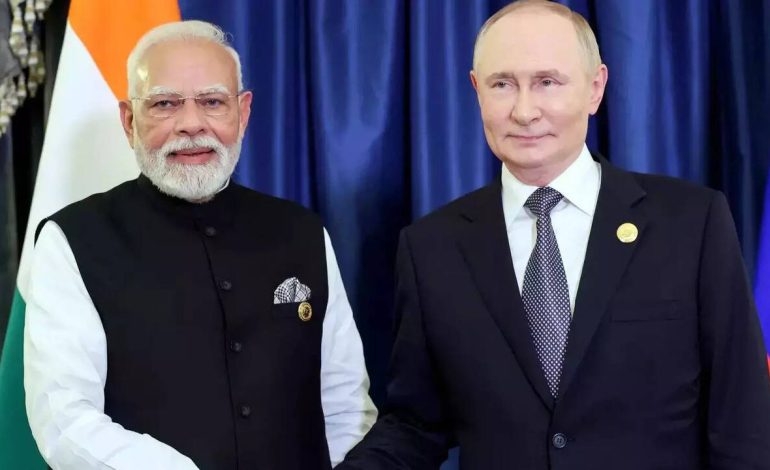

What Putin’s 2025 Visit Means for India–Russia Relations
The Putin India visit 2025 has become one of the most defining geopolitical events of the year, with major implications for Russia-India trade, defence and diplomacy. The two-day summit marks a renewed attempt to strengthen bilateral ties at a time when the global power balance is shifting rapidly. With Putin India visit 2025 discussions spanning defence modernization, energy supply, trade expansion and BRICS strategy, the outcomes of this meeting could reshape India’s long-term economic and strategic roadmap.
Defence Cooperation — Strengthening India’s Military Backbone
Defence has always been the backbone of India–Russia relations. Historically, Russia (and the former Soviet Union) supplied a significant portion of India’s defence equipment. During 2012–2022, Russia accounted for large shares of Indian arms imports.
🔹 What’s New
This summit emphasized joint development and manufacturing rather than mere buyer-seller deals. Expect announcements related to co-production of defence platforms, advanced weapon systems and defence technology collaboration. AP News+2Financial Times+2
India’s Air Defence and strategic missile upgrades — including follow-ups on systems like S-400 — may be prioritized under renewed cooperation. The Times of India+2VISION IAS+2
Strategic sectors like aerospace parts, naval shipbuilding, and missile-technology transfer are likely to see collaboration under “Make in India + Russia” frameworks.
🔹 Significance
This could modernize India’s military capabilities, reduce dependency on Western arms, and build indigenous manufacturing capacities — especially beneficial amid a volatile global security landscape.
Trade & Economy — Target: $100 Billion by 2030
One of the headline outcomes of this visit was a fresh commitment: to boost bilateral trade to $100 billion by 2030 — up from roughly $68–70 billion in FY 2024–25.
🔹 Key Areas of Expansion
Energy & Fuel Security: Russia has pledged uninterrupted fuel & crude oil supply — a lifeline for India’s growing energy needs.
Agriculture & Fertilizers: Already, Indian fertilizer firms are signing joint ventures with Russian counterparts to ensure long-term nutrient security for Indian agriculture.
Manufacturing & Technology Imports: Indian pharma, machinery, textile and IT services sectors could see increased access to Russian markets — helped by a proposed rupee-rouble settlement mechanism to bypass dollar-based sanctions pressure.
Logistics & Connectivity: Emphasis on trade corridors and streamlined logistics — including maritime and shipping partnerships — to ease bilateral trade flow and reduce transport times. India Today+2Wikipedia+2
🔹 Broader Impact
Success here could transform India–Russia economic ties from energy-heavy and defence-centric to diverse, modern, and mutually beneficial across multiple sectors — giving Indian exporters new markets and Russia new clients beyond energy.
Strategic Diplomacy & BRICS: Reworking Global Power Dynamics
This India-Russia summit also resonates with global geopolitics, especially with the relevance of BRICS — the group that binds major emerging economies including Brazil, Russia, India, China, and South Africa.
🔹 Why It Matters
As the world shifts away from a bipolar US-Russia/US-China confrontation model, alliances like BRICS hold increasing weight for “Global South” nations. A stronger India-Russia bond under BRICS can shift trade, energy, finance and diplomatic alignments.
Cooperation in energy, critical minerals, defence, and technology may redefine internal power balances within BRICS — giving India leverage to drive policy and collaboration agendas.
With countries seeking alternatives to dollar-dominated financial systems and western geopolitical influence, India–Russia’s insistence on bilateral trade agreements, rupee-rouble settlements, and energy-security deals offers a compelling alternative framework.
🔹 What It Signals to the World
India’s posture of strategic autonomy becomes clearer. By deepening ties with Russia while continuing global diplomacy with the US, EU and others, India signals: “We will align interests, not sides.”
This flexibility may make India a pivotal bridging nation — influencing diplomacy, trade, energy security and global south solidarity.
Challenges & Red Flags to Watch
No major policy move is without risks. Observers point out potential pitfalls that both nations need to manage carefully:
🔸 Western Pressure & Geopolitical Risk
India’s energy and defence ties with Russia come under scrutiny from Western powers — imposition of tariffs, sanctions, and global political pressure (e.g. from the US) could affect diversification and global trade deals. The Times of India+2ABC+2
🔸 Trade Imbalance & Export Dependence Issues
Historically, trade between India and Russia has been skewed — India imports a large amount of crude oil/fuel, machinery and energy resources, while its exports to Russia remain limited. Overdependence on Russian imports can risk trade sustainability.
🔸 Domestic & International Perceptions
Given Russia’s ongoing war in Ukraine, some global stakeholders view deeper ties with Moscow skeptically. India must balance global reputation, democratic values, and strategic autonomy thoughtfully.
🔸 Implementation Challenges
Defence co-production, energy projects, fertilizer joint ventures — all require stable governance, transparency, supply-chain security and regulatory trust. Any delay or mismanagement can hurt bilateral trust.
What to Watch in the Coming Months
If the agreements from this summit proceed as planned, expect to see:
Joint defence manufacturing units under “Make in India + Russia” roadmap
Energy supply security deals including oil, gas, nuclear fuel, possibly via new long-term contracts
Greater trade diversification, with increased Indian exports (textiles, pharma, agriculture) to Russia, and vice versa
Use of national currencies (rupee-rouble) for settlement to bypass global sanction-related volatility
A stronger India-led voice within BRICS, influencing emerging-economy trade & energy policies
If these materialize, India–Russia partnership may enter a new era — more balanced, diversified, and future-ready.
👉 Read our previous article: “India-U.S. Energy Trade Set to Grow: What It Means for Global Energy Security“
Final Thought
Putin’s 2025 visit — under global sanction pressure, energy crisis, and shifting geopolitics — could still be one of the most consequential summits for India in decades.
It is more than handshake diplomacy. It’s about:
securing stable energy supply
modernizing defence infrastructure
boosting trade diversification
leveraging strategic autonomy
influencing global south geopolitics
India is betting on balance — balancing east and west, trade and diplomacy, tradition and innovation. If handled wisely, this partnership could redefine global alliances and power structures in the coming years.